Ben Roth · 21 September 2026
Uncovering Microclimates in Elevated Maple Stands: Temperature Variations and Plant Adaptations Across Slopes
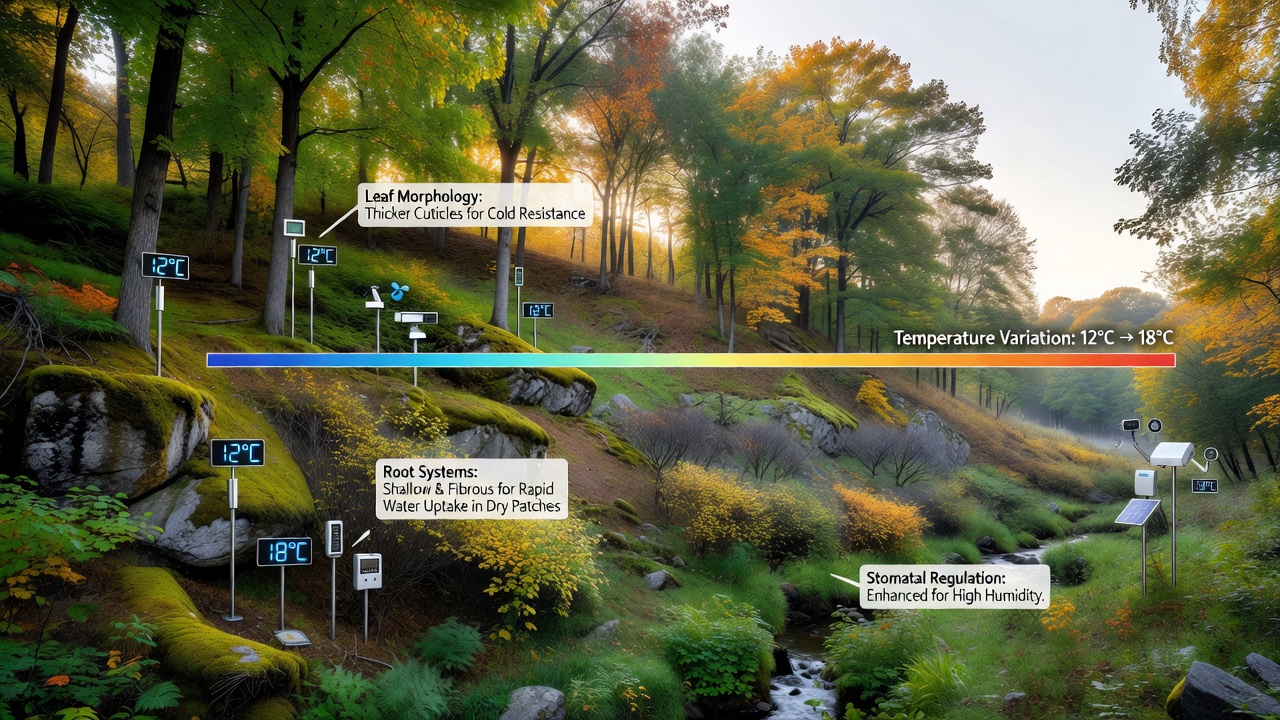
Researchers studying elevated maple stands have documented distinct microclimates shaped by slope orientation, elevation gradients, and seasonal shifts, with data from monitoring stations revealing temperature differences that reach several degrees Celsius between adjacent hillsides. These variations influence soil moisture retention, frost timing, and growing season length, creating pockets where maple trees and understory plants respond with measurable physiological changes.
Temperature Patterns Across Slopes
North-facing slopes in these stands often maintain cooler daytime temperatures because direct solar exposure remains limited throughout the year, while south-facing slopes warm more rapidly during daylight hours and cool faster at night. Studies conducted in the Appalachian and Laurentian regions show that temperature differentials between opposing slopes can exceed 4°C at the same elevation during peak summer months, and this gap narrows in winter when snow cover equalizes radiative cooling. Elevation compounds the effect, with each 100-meter gain in height typically lowering average temperatures by 0.6°C, though slope aspect modulates that baseline substantially.
Monitoring equipment placed at multiple points across single stands has recorded how cold air drainage follows topographic contours, pooling in valley bottoms and leaving mid-slope locations relatively warmer. In September 2026, expanded sensor networks across several Canadian sites captured early autumn cooling events that highlighted these drainage patterns, showing how sudden temperature drops affect maple dormancy onset differently depending on slope position.
Plant Adaptations to Microclimate Gradients
Maple species in these environments exhibit adjustments in leaf morphology and stomatal density that correlate with local temperature regimes, allowing individuals on warmer south slopes to maintain higher photosynthetic rates during extended warm periods. Understory herbs and shrubs display similar patterns, with some populations developing deeper root systems on drier, sun-exposed slopes to access consistent moisture reserves while those on shaded slopes allocate more resources to above-ground growth. Genetic analyses indicate that certain maple subpopulations carry alleles associated with earlier bud break on cooler slopes, reducing frost damage risk during spring transitions.
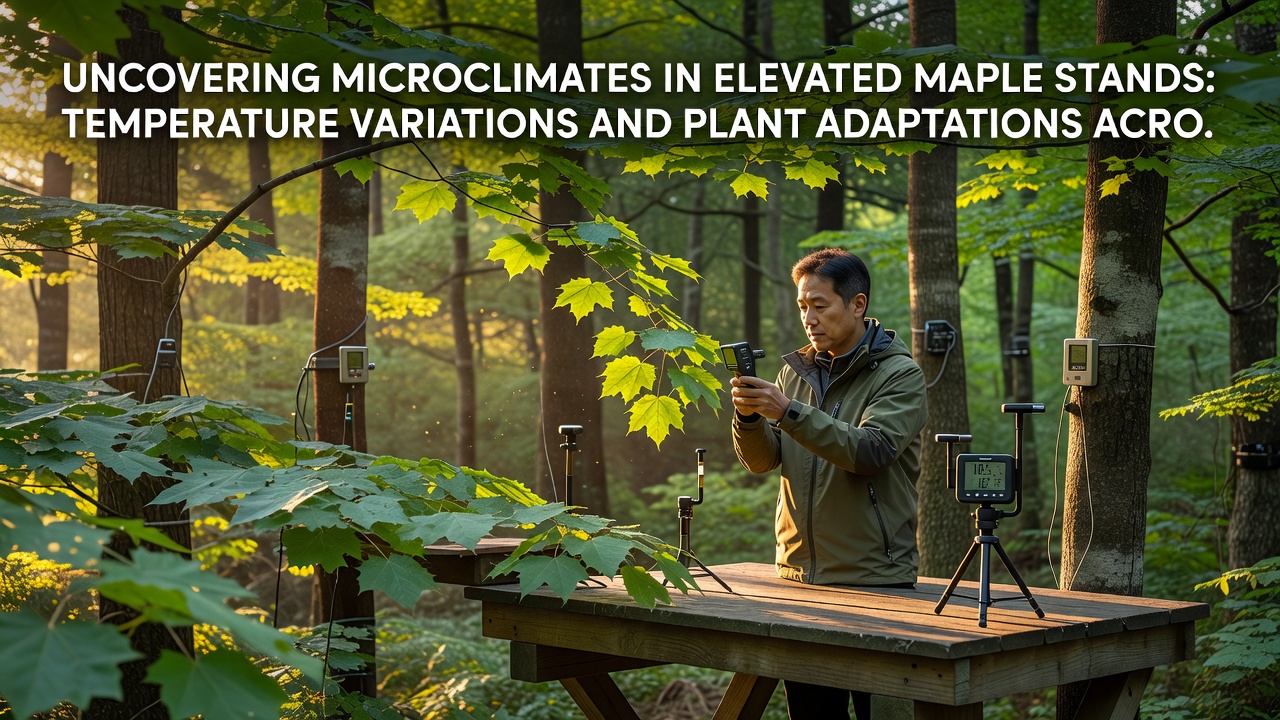
Observations from long-term plots reveal that seedling survival rates shift measurably across short distances, with south-slope seedlings experiencing higher desiccation stress during dry spells and north-slope seedlings facing greater competition from shade-tolerant species. These patterns hold across multiple stands, suggesting the adaptations arise from both phenotypic plasticity and localized selection pressures rather than random variation.
Broader Ecological Implications
Soil temperature profiles measured at depths of 10 and 30 centimeters demonstrate that microclimate effects extend below ground, influencing microbial activity and nutrient cycling rates that in turn affect maple growth cycles. Data collected through collaborative networks, including work referenced by Natural Resources Canada, show that warmer south-slope soils accelerate decomposition during shoulder seasons, releasing nutrients earlier than cooler north-slope locations. This timing difference influences competitive dynamics among plant species sharing the same stand.
Remote sensing combined with ground validation has allowed researchers to map these microclimate zones at finer scales, revealing that even modest topographic relief creates habitat mosaics capable of supporting distinct plant communities within a single forest block. Continued data collection through 2026 and beyond is expected to clarify how these localized patterns buffer or amplify regional climate trends.
Conclusion
Evidence from temperature monitoring and plant trait measurements confirms that microclimates within elevated maple stands produce consistent variations tied to slope characteristics, driving observable adaptations in both overstory and understory species. Ongoing research continues to quantify these relationships across additional sites, providing baseline information for understanding forest responses to changing environmental conditions.