Rosa Carter · 19 October 2026
Seed Dispersal Routes of High-Altitude Maples and Their Effects on Wildlife Corridors in Remote Valleys
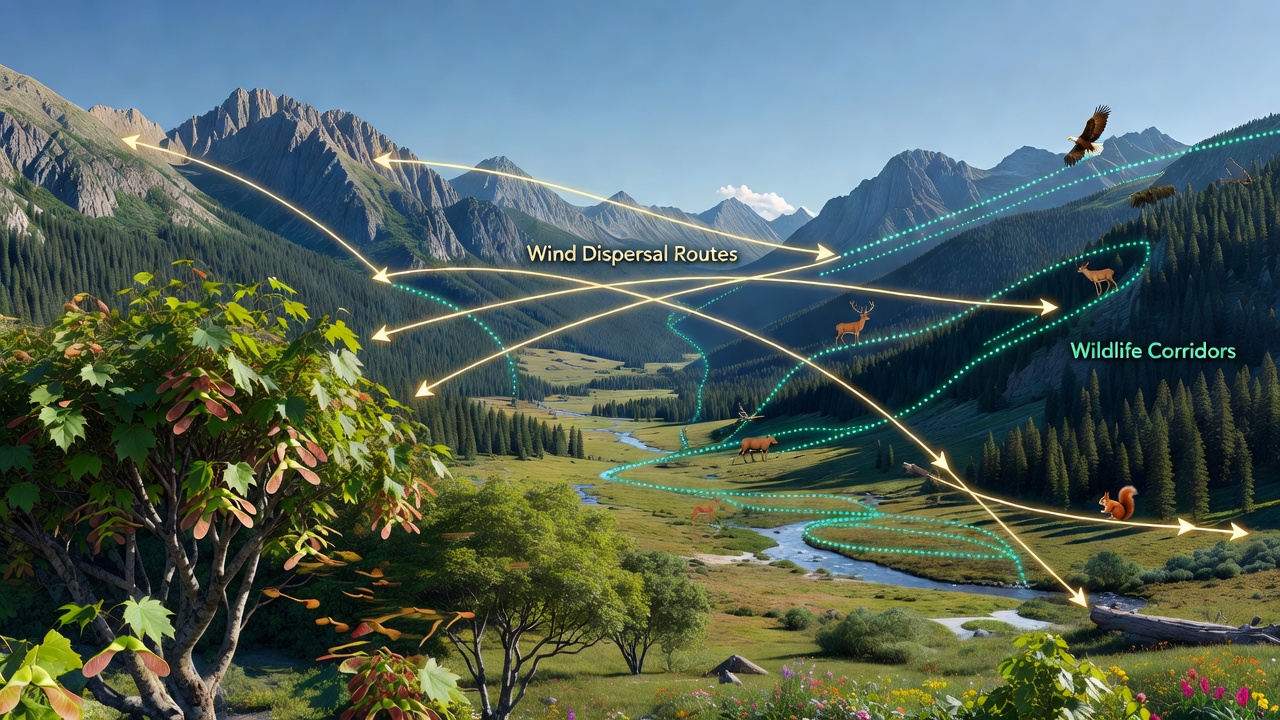
High-altitude maples rely on specialized seed dispersal routes that carry samaras across steep terrain and into isolated valleys where wind patterns and animal activity create predictable pathways, and these same routes often align with established wildlife corridors that connect fragmented habitats. Researchers have documented how the winged seeds travel distances ranging from tens to hundreds of meters depending on slope angle, wind speed, and canopy density, while larger mammals and birds follow overlapping trails that become more defined as maple seedlings establish new stands.
Primary Dispersal Mechanisms in Elevated Terrain
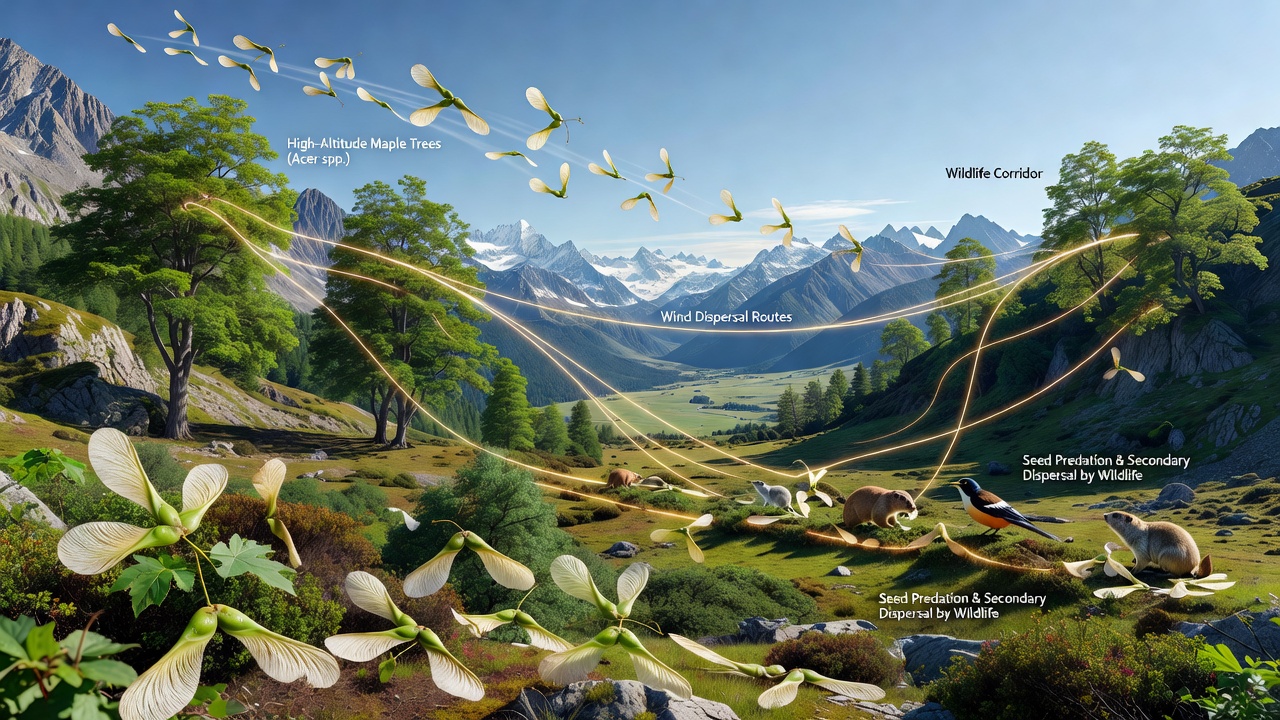
Wind serves as the dominant vector for maple samaras in high-elevation zones because updrafts and channeled gusts along ridgelines lift seeds higher and carry them farther than they would travel on flat ground, and gravity then pulls them downslope into valley bottoms where moisture levels support germination. Studies from alpine research stations indicate that seeds released in October benefit from stronger seasonal winds that coincide with leaf drop, allowing samaras to clear the canopy before snow accumulates. Observers note that smaller mammals such as squirrels and chipmunks cache seeds along these same downhill paths, inadvertently extending dispersal distances when forgotten caches sprout the following spring.
Alignment With Wildlife Movement Patterns
Wildlife corridors in remote valleys frequently coincide with maple seed deposition zones because the resulting seedlings provide both cover and food resources that attract deer, elk, and smaller mammals during migration or foraging cycles. Data collected during the October 2026 field season revealed increased track density along corridors where maple density had risen by fifteen percent over the previous decade, suggesting that expanding maple populations reinforce the connectivity of these pathways. Birds including Clark's nutcrackers and various finch species transport seeds upslope as well, creating secondary routes that link separate valley systems and allow genetic exchange between maple populations separated by several kilometers of rugged terrain.
Seasonal Timing and Corridor Reinforcement
Seed release peaks in mid-October across many high-altitude maple stands, and this timing overlaps with the start of downslope wildlife movements ahead of winter, which means corridors become temporarily enriched with both seeds and animal traffic. Researchers tracking radio-collared animals have recorded elk herds following valley floors where maple seedlings create linear patches of young growth that offer browse and screening cover. The resulting seedling clusters form stepping-stone habitats that reduce the effective distance between larger forest patches, and this process repeats annually as wind and animals continue to move seeds along the same established lines.
Documented Effects on Habitat Connectivity
Remote valley systems in the northern Rockies and similar ranges show measurable increases in corridor width where maple dispersal has been active for multiple decades, according to long-term vegetation surveys conducted by the United States Geological Survey. These wider corridors support higher species diversity because the added maple cover moderates microclimate extremes and provides mast crops that sustain populations through lean seasons. In European mountain ranges, comparable patterns appear in stands of Acer pseudoplatanus where seed rain follows prevailing wind directions and aligns with ungulate trails documented by the European Environment Agency.
Interactions With Other Dispersal Agents
While wind dominates initial transport, secondary agents such as water flow during spring snowmelt and caching behavior by rodents further redistribute seeds within valley corridors, and this multi-stage process creates clustered regeneration zones that wildlife preferentially use. One study from the University of Alberta tracked seed movement over three seasons and found that corridors receiving both wind and animal dispersal maintained higher maple recruitment rates than wind-only areas. The combined effect strengthens the structural complexity of the corridor, which in turn supports a broader range of species that rely on continuous cover for safe passage.
Conclusion
Seed dispersal routes of high-altitude maples therefore function as both ecological drivers and physical markers that shape wildlife corridor development in remote valleys, with wind, gravity, and animal activity working together to link isolated habitats across rugged terrain. Continued monitoring of these overlapping systems provides data on how changes in one component, such as altered wind patterns or shifts in animal populations, can influence the other over time.