Parker Sullivan · 2 November 2026
Exploring Genetic Markers in Isolated High-Elevation Maples That Reveal Historical Migration Patterns Across Fragmented Mountain Ranges
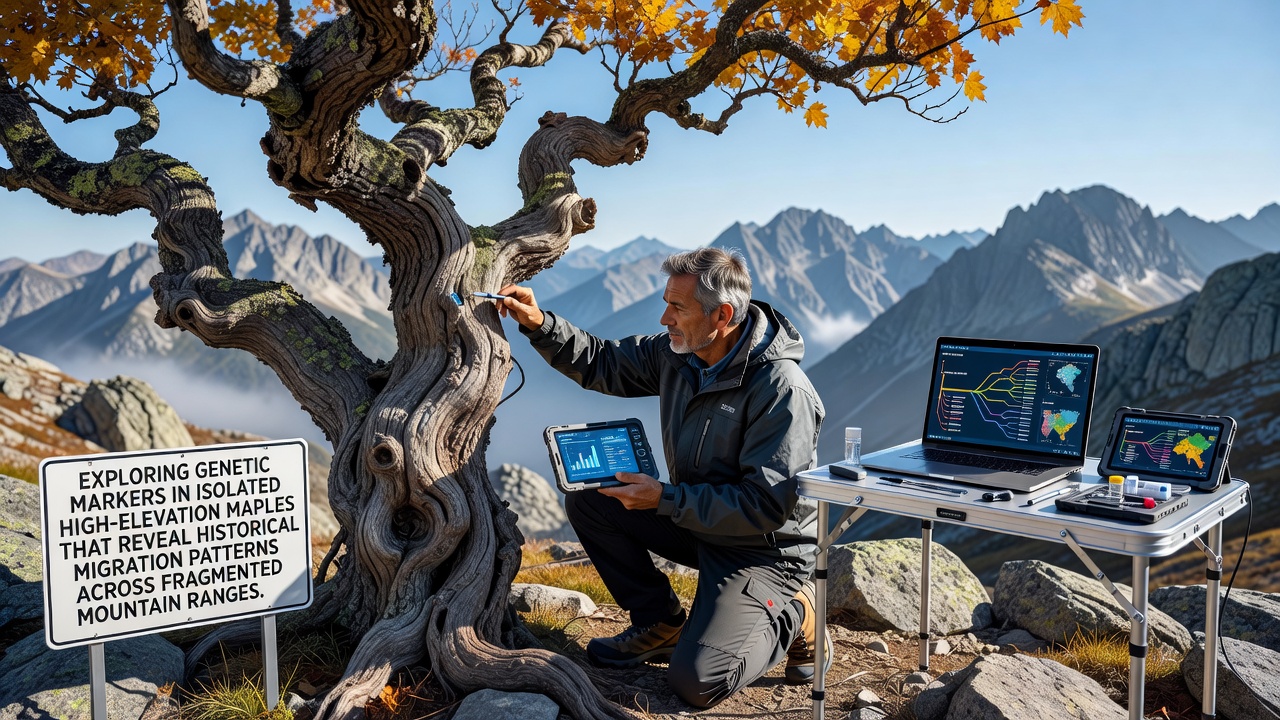
Researchers examining isolated populations of high-elevation maples have identified distinct genetic markers that trace long-distance migrations across broken mountain systems, and these markers include single nucleotide polymorphisms in nuclear DNA along with sequence variations in chloroplast genomes. Studies conducted in ranges such as the northern Rockies adn segments of the European Alps show that certain alleles appear at higher frequencies in populations separated by deep valleys, which suggests historical gene flow occurred when climates allowed continuous forest belts to form during cooler periods.
Genetic sampling protocols typically involve collecting leaf tissue from multiple individuals per stand, then sequencing targeted regions known to accumulate mutations slowly enough to record events from the Pleistocene onward. Data from these efforts reveal that some maple lineages crossed what are now arid lowlands when glacial advances lowered treelines and connected suitable habitats, while other markers point to more recent bottlenecks caused by post-glacial warming and habitat fragmentation.
Marker Discovery and Analytical Methods
Teams isolate candidate loci by comparing whole-genome sequences from reference individuals against broader population panels, and they validate markers through association with geographic distance rather than local adaptation alone. Software packages that model isolation-by-distance and approximate Bayesian computation help separate signals of ancient migration from contemporary pollen or seed exchange, while researchers cross-check results against fossil pollen records to confirm timelines.
One study released in 2024 mapped chloroplast haplotypes across disjunct maple stands in the Canadian Rockies and adjacent Coast Mountains, finding shared variants that imply gene movement occurred before the last glacial maximum. Those same haplotypes remain absent from intervening lower-elevation sites, which supports the interpretation that migration routes closed as temperatures rose.
Patterns Across Major Mountain Systems
Fragmented ranges in Asia present comparable patterns, where high-elevation Acer populations in the Hengduan Mountains carry nuclear markers linking them to stands now separated by the Tibetan Plateau uplift. Evidence indicates stepwise northward expansion during interglacial intervals followed by contraction into sky-island refugia, and similar dynamics appear in the Appalachians where certain alleles cluster in southern peaks yet occur sporadically farther north.
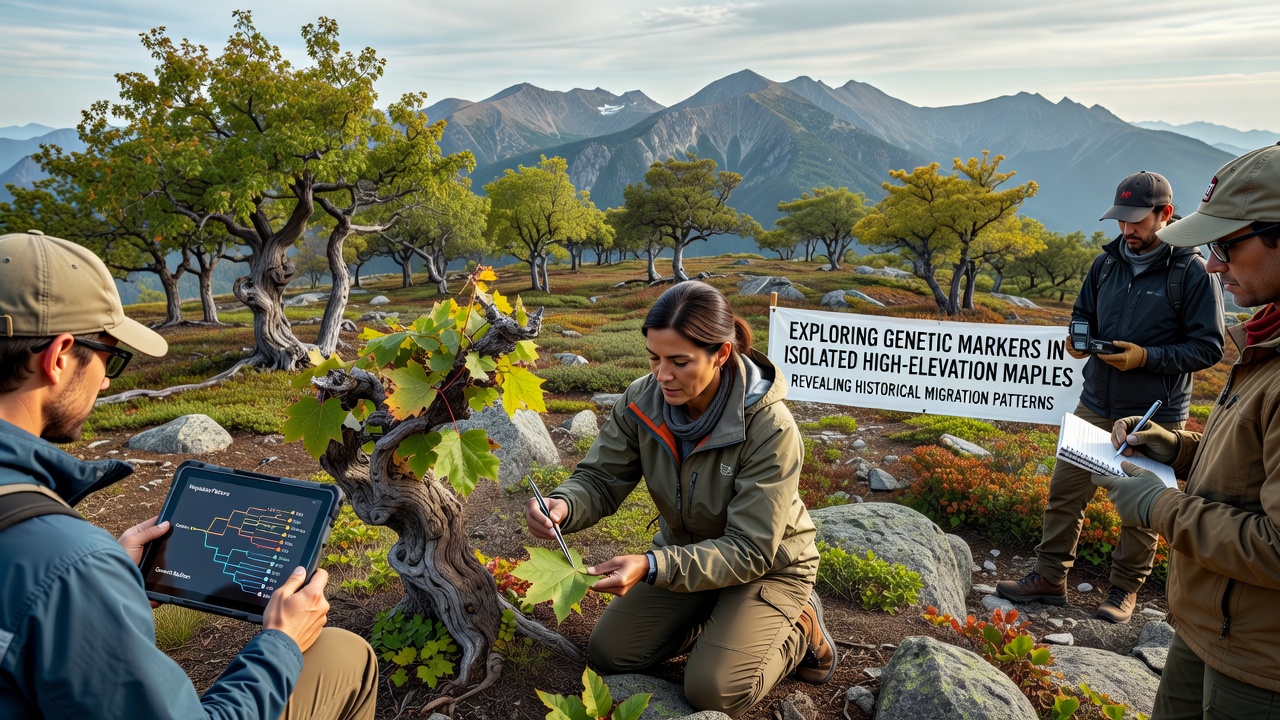
Observers note that seed dispersal limitations in these environments amplify the value of genetic data, because direct observation of long-distance events remains rare. Wind and animal vectors can move seeds across valleys during rare weather events, yet the genetic record integrates many such episodes over millennia and provides a cumulative picture unavailable from short-term field studies.
Integration with Climate and Topographic Data
Models that combine genetic distances with paleoclimate reconstructions and digital elevation data show corridors of suitable habitat opened and closed in synchrony with marker distributions, and these models gain precision when researchers incorporate soil parent material and aspect preferences that further restrict maple establishment. In November 2026, additional field campaigns are scheduled to expand sampling into understudied sectors of the southern Andes where related Acer taxa occupy comparable elevations, which should test whether the same marker sets recur across continents or reflect independent evolutionary trajectories.
Population genetic statistics such as pairwise Fst values and shared allele counts quantify the strength of historical connections, while spatial autocorrelation analyses highlight abrupt breaks that coincide with major topographic barriers. Researchers have observed that stands on opposite sides of wide valleys often exhibit higher differentiation than those aligned along ancient ridgeline routes, even when current geographic distances are similar.
Implications for Ongoing Research
Continued sequencing of herbarium specimens collected over the past century allows direct comparison of allele frequencies through time, and preliminary results indicate shifts consistent with recent warming trends that may further isolate remaining populations. Government agencies including Natural Resources Canada have begun incorporating these genetic datasets into habitat connectivity assessments, while parallel efforts at institutions such as the U.S. Geological Survey Northern Rocky Mountain Science Center focus on predictive modeling of future range shifts.
Those who've studied these systems note that chloroplast markers, being maternally inherited in maples, primarily track seed-mediated migration, whereas nuclear markers capture both pollen and seed contributions, which together produce a fuller reconstruction of historical movement. This dual-marker approach has clarified cases where pollen flow maintained genetic cohesion even after seed exchange ceased due to topographic isolation.
Conclusion
Genetic marker analyses continue to refine understanding of how high-elevation maples navigated fragmented mountain landscapes through past climate cycles, and the accumulating datasets support increasingly detailed maps of former migration corridors. Ongoing fieldwork and expanded sequencing efforts promise additional resolution, particularly as new samples from remote ranges become available and computational methods improve.